Carbohydrate loading is one of the most discussed nutrition strategies in endurance sport, yet most guidance is calibrated to marathon distances. The half marathon sits in a physiologically interesting middle ground: at 13.1 miles, some runners will exhaust glycogen stores, others will not — and the answer depends almost entirely on pace and total race duration.
The fundamental question is whether your race will last long enough to deplete glycogen. At race intensity, the body burns approximately 60–70g of carbohydrate per hour from muscle glycogen. Most athletes carry 300–400g of accessible glycogen at rest. A 90-minute half marathon (pace around 4:15/km) will consume roughly 85–100g of carbohydrate — well within resting glycogen stores. A 2:30 half marathon (6:00/km pace) will consume 150–175g — approaching depletion, particularly if pre-race eating was inadequate.
Who Benefits Most from Carb Loading for a Half Marathon
The greatest benefit of carb loading is seen when:
- Race duration exceeds 90 minutes — glycogen depletion becomes a genuine performance limiter
- You have been training with moderate or low carbohydrate intake in the days before the race, leaving glycogen stores below normal
- You plan to race at a high relative intensity (above 80% VO2max), where carbohydrate oxidation rates are highest
- You will not be taking gels or carbohydrate during the race (common for faster half marathoners running sub-90 minutes)
The Half-Marathon Carb Loading Protocol
Unlike marathon carb loading (which begins 3–5 days out with significant dietary changes), the half marathon requires a simpler 24–36 hour strategy:
- 36 hours before race: Reduce fibre and fat intake; increase carbohydrate to 8–10g per kg of body weight. For a 65kg runner, this is 520–650g of carbohydrate. Achievable by emphasising rice, pasta, bread, oats, fruit, and starchy vegetables — not extraordinary volumes of food.
- Day before race: Continue high-carbohydrate eating but reduce overall food volume in the evening to avoid the gut discomfort that comes from a full stomach on race morning.
- Race morning: 2–4 hours before the gun, consume 1–4g of carbohydrate per kg body weight — a 65kg runner should aim for 65–200g. Oats with banana and honey, or white bread with jam and a sports drink, are reliable choices. White/low-fibre options reduce GI risk during the race.
- 30–60 minutes before start: A 20–30g carbohydrate top-up (half a gel, a banana, or a sports drink) is supported by research showing a modest further increase in pre-exercise liver glycogen.
In-Race Fueling for Half Marathoners
For runners finishing in under 90 minutes: in-race carbohydrate is not strictly necessary from an energy standpoint — starting glycogen stores will be sufficient if carb loading was adequate. However, a single caffeinated gel at km 7–9 can improve performance through central nervous system stimulation even when peripheral energy stores are not limiting.
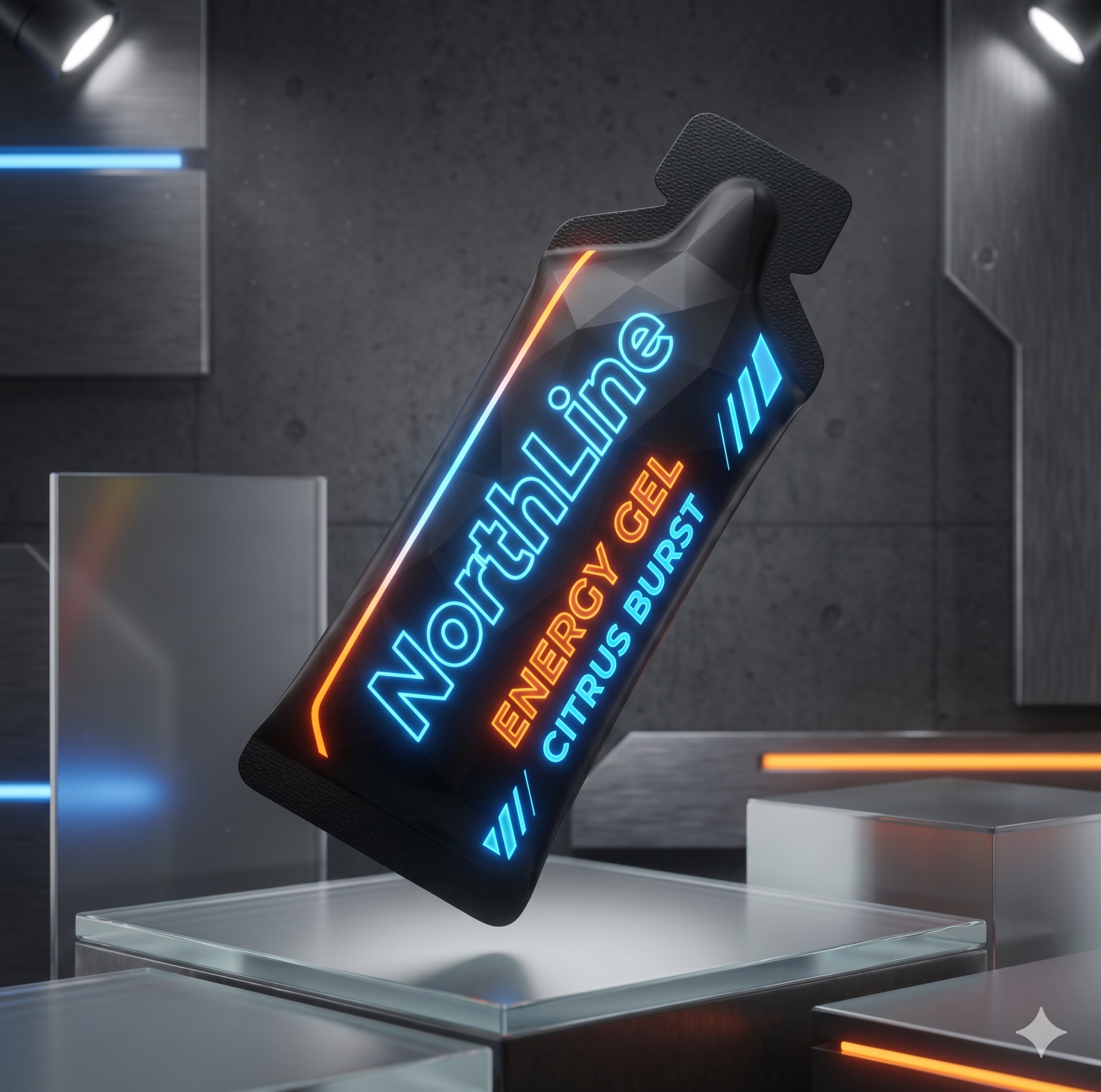
For runners finishing between 90 and 150 minutes: 1 gel every 30–40 minutes is recommended, starting at 30 minutes. Each NorthLine gel provides 22g of carbohydrate in a dual-transporter formulation — taken with 150ml of water, absorption is rapid and GI risk is low.
What Not to Do
- Avoid pasta parties the night before: A single large pasta meal 12 hours before the race does not meaningfully increase muscle glycogen. The 24–36 hour window of elevated carbohydrate intake is what fills stores.
- Avoid unfamiliar high-fibre foods: Beans, lentils, and brassica vegetables consumed the day before have caused many race-day GI emergencies. Stick to low-residue carbohydrate sources you have used in training.
- Do not skip the race-morning meal: Liver glycogen drops by 50% overnight during sleep — even a small race-morning meal meaningfully tops up blood glucose and total available carbohydrate.
Use the Race Day Nutrition Planner to build a personalised half-marathon fueling schedule based on your target finish time, body weight, and pre-race meal timing. Input your expected start time and the calculator outputs a gel schedule and pre-race meal window calibrated to your race duration.