The full Ironman triathlon — 3.8km swim, 180km bike, 42.2km run — is the longest single-day endurance event most athletes will ever attempt. At moderate pace, a 12-hour Ironman burns approximately 800–1,000 calories per hour, totalling 9,600–12,000 calories over the race. You enter with around 2,000 calories of accessible glycogen. The math is unforgiving: every hour of underfeeding compounds into the brick wall that destroys so many athletes on the run.
Most Ironman athletes who collapse in the marathon are not undertrained — they are underfuelled. Race-day nutrition is the fourth discipline of Ironman, and most athletes spend less time practising it than they spend on any of the three others.
Pre-Race Nutrition: Night Before and Race Morning
The night before your Ironman, prioritise carbohydrate density over novelty. A proven pre-race dinner: 1–1.5g of carbohydrate per kilogram of body weight (100–120g for a 75kg athlete) from familiar, low-fibre sources — pasta, white rice, or potato with lean protein. Avoid high-fat, high-fibre, or gas-producing foods (beans, cruciferous vegetables, excess raw vegetables). Hydrate well but don't force fluids — urine should be pale yellow, not clear.
Race morning: eat 3–4 hours before your wave start. Target 1–1.5g/kg carbohydrates from easy-digesting sources (white toast, banana, rice cakes, oatmeal without high-fat additions). A 75kg athlete should aim for 75–100g of carbohydrates at breakfast — not a large volume of food. In the 60–90 minutes before race start, limit intake to a small carbohydrate top-up (a gel or 25g carbohydrate bar) and 300–400ml of fluid with electrolytes.
The Swim: No Fueling Required
The Ironman swim (approximately 60–90 minutes for most age-groupers) requires no mid-swim fueling. Your pre-race breakfast glycogen is fully sufficient. Focus on starting your electrolyte strategy on the bike as soon as possible after T1. Some athletes take a gel in T1 immediately on exiting the water — this is appropriate, particularly if your swim exceeded 75 minutes or your breakfast timing was disrupted.
Bike Nutrition: Where the Race Is Won or Lost
The 180km bike leg (typically 5–7.5 hours) is the primary fueling window for your marathon. Under-eating on the bike is irreversible — you cannot catch up nutritionally on the run. Target 60–90g of carbohydrates per hour on the bike, with most athletes performing best at 70–80g/hr. A practical bike fueling framework for a 6-hour bike split:
- Hours 1–2: 60g carbohydrate/hour, primarily from gels and sports drink. Gut is fresh and absorption is high.
- Hours 3–4: 75–80g carbohydrate/hour. This is when most athletes inadvertently under-eat — prioritise regular gel intake every 25–30 minutes.
- Hours 5–6: 60–70g carbohydrate/hour. Reduce solid food intake and switch to liquid carbohydrates and gels to ease the transition to running.
Electrolytes: target 500–800mg of sodium per hour on the bike in temperate conditions, and up to 1,000–1,200mg/hr in heat above 25°C. Cramping in Ironman is overwhelmingly a sodium and hydration issue, not a potassium or magnesium deficiency.
T2 and the Run: Fueling a 42km Effort
By T2, your gut has been absorbing nutrition for 5–7 hours and is fatigued. Many athletes experience nausea, appetite loss, or GI distress in the first few kilometres of the run — this is normal. Maintain carbohydrate intake anyway, even if it means reducing quantity temporarily. A practical Ironman run fueling approach:
- Continue gels every 30–40 minutes. Many athletes switch to cola (available at most Ironman aid stations from km 20+) in the back half of the marathon — the caffeine and simple sugar combination provides a measurable late-race boost.
- Walk aid stations — it takes 10–15 seconds and allows proper swallowing of fluids and gels without GI distress from running while eating.
- If nausea develops, reduce gel intake temporarily and switch to small volumes of cola, broth (available at some races), or sports drink.
- Caffeine: 100–200mg of caffeine at km 25–30 of the run provides a measurable performance boost for athletes who have managed caffeine intake strategically during the bike leg.
Total Carbohydrate Needs Across 140.6
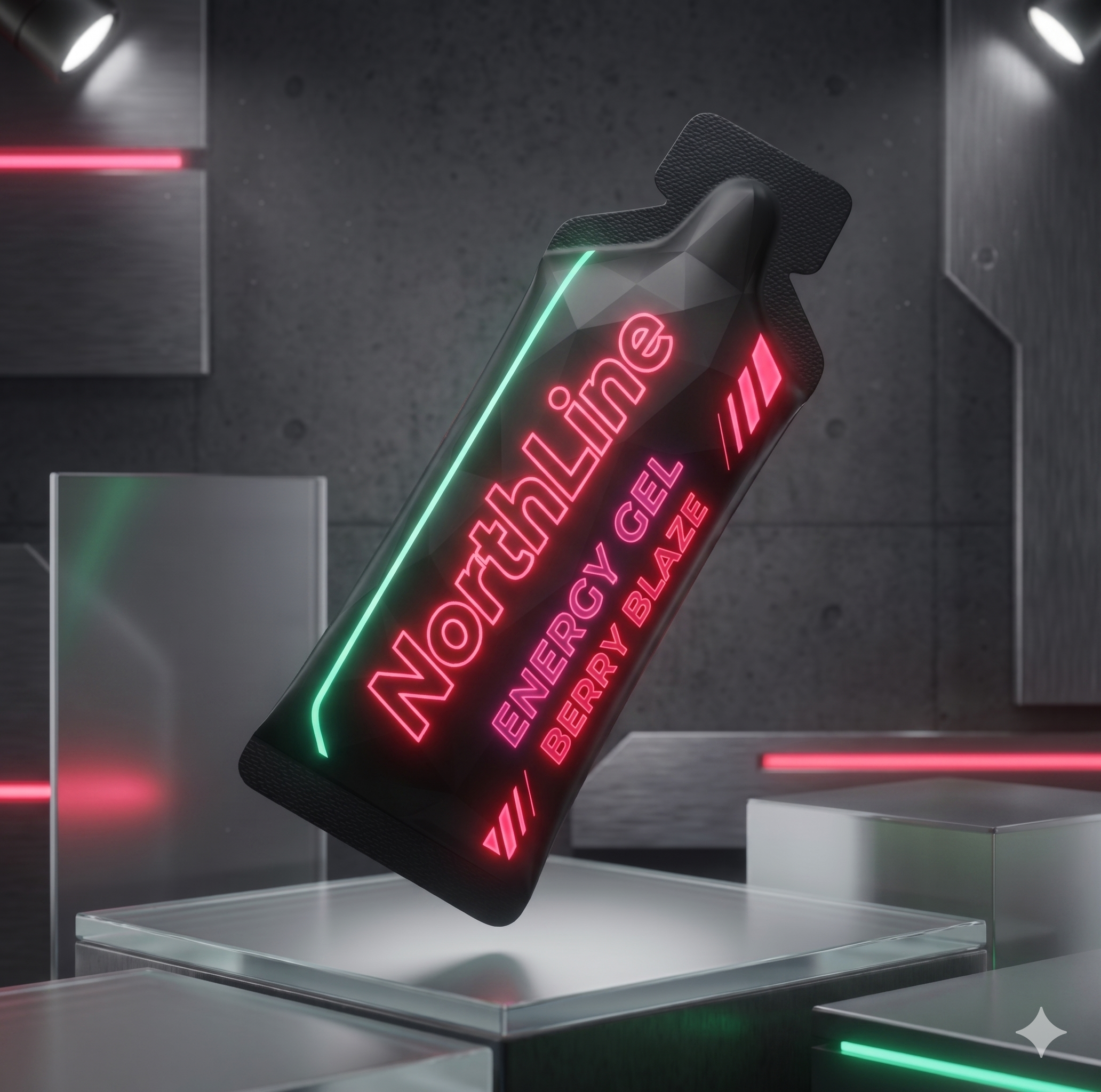
A 10-hour Ironman (realistic for mid-pack age-groupers) requires approximately 650–750g of carbohydrates from all sources during the race. This is a large number and most athletes fall short. Breaking it down: breakfast contributes approximately 100g, bike 350–400g, run 150–200g. Cross-reference your specific race plan using the Race Day Nutrition Planner, which calculates gel count by finish time goal and splits fuel targets by discipline. NorthLine's dual-source gels (22g carbohydrate each) are engineered for this kind of high-volume, multi-hour fueling — the 2:1 glucose-to-fructose ratio maximises intestinal absorption up to 90g/hr without the GI distress that single-source glucose gels can cause at high doses.