Energy gels are one of the most effective tools in an endurance athlete's arsenal, but many athletes use them without understanding the underlying science. Getting the timing and dosage right can be the difference between hitting the wall and crossing the finish line strong.
How Your Body Uses Carbohydrates
During moderate to high-intensity exercise, your muscles rely primarily on glycogen — stored glucose in muscle tissue and the liver. At race pace, the average athlete burns through roughly 60 grams of carbohydrate per hour. The problem: your body can only store around 90 minutes' worth of glycogen at race intensity.
Once glycogen stores are depleted, performance drops sharply. This is the infamous "bonk" or "hitting the wall." Energy gels are engineered to replenish blood glucose rapidly, bypassing the need for glycogen and providing immediate fuel.
The Role of Dual Transporters
Modern energy gels — including the NorthLine Gold Standard range — use a dual-transporter approach: a mix of glucose and fructose. This matters because glucose and fructose use different intestinal transport proteins. Combining them allows your gut to absorb up to 90g of carbohydrate per hour, compared to only 60g from glucose alone.
This 2:1 glucose-to-fructose ratio is backed by research from Jeukendrup et al. and has been validated in multiple endurance sport studies.
Timing Is Everything
Most athletes should start taking gels early — before they feel hungry. A common protocol:
- First gel at 45–60 minutes into exercise
- Subsequent gels every 30–45 minutes thereafter
- Always consume with 150–200ml of water for optimal absorption
Taking gels too late means you're already in deficit. Your gut also absorbs carbohydrates more efficiently when you start fueling before depletion sets in.
Electrolytes in Gels
Sodium is often added to energy gels for a reason beyond taste. Sodium facilitates glucose transport in the intestine via the SGLT1 transporter, improving absorption speed. It also helps maintain plasma volume and supports proper muscle function during prolonged activity.
Practical Application
For a standard marathon or 3-hour+ event, you should plan for 4–6 gels total. Practice your fueling strategy in training — never try a new product on race day. Your gut, like your legs, needs training. See our full breakdown on how many gels to take for a marathon — including a schedule by finish time.
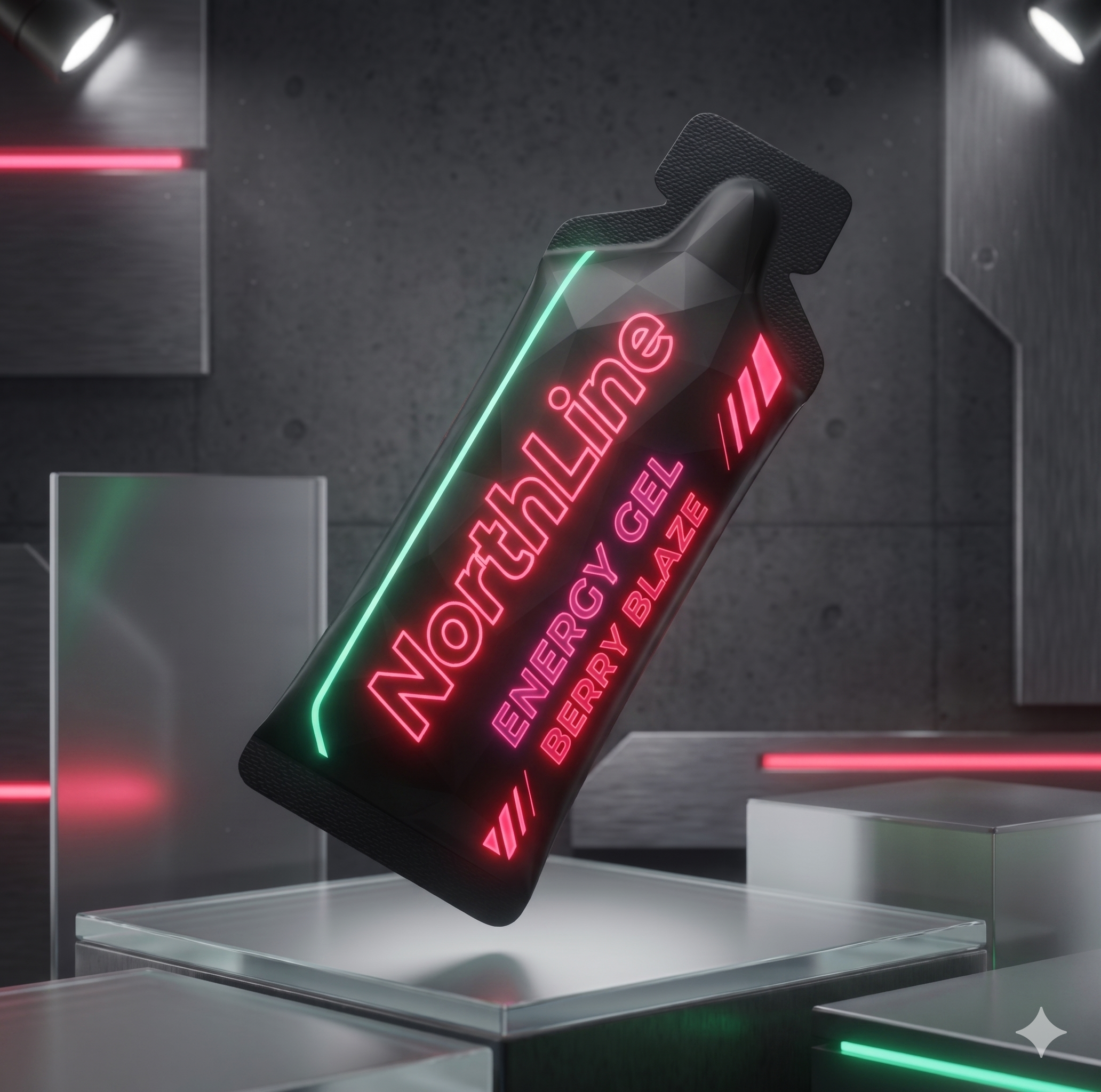
The NorthLine Green Apple and Berry gels are formulated with this dual-transporter approach and contain 22g of carbohydrates per serving, putting you squarely in the 60–90g/hour window when dosed correctly. Use the Race Day Nutrition Planner to build your personalised gel schedule.