The Half Ironman 70.3 — 1.9km swim, 90km bike, 21.1km run — typically takes age-group athletes 4–6 hours to complete. This duration puts every athlete firmly in the territory where exogenous carbohydrate is not optional: glycogen stores are insufficient for the full race without supplementation, and the calorie expenditure (2,000–3,500 kcal depending on body weight and pace) must be partially replaced in-race to preserve run performance.
The 70.3 nutrition challenge is distinct from shorter triathlons (where you can undereat and manage) and full Ironman (where the time window allows more flexible intake). At 70.3, the compressed timeline demands precision: enough carbohydrate to sustain run pace, but not so much that GI distress derails the back half of the bike or entire run.
Total Energy and Carbohydrate Requirements
A 70kg athlete completing a 70.3 in 5 hours burns approximately 2,800–3,200 kcal total. Target in-race carbohydrate intake of 60–90g per hour — using dual-transporter products (glucose + fructose in 2:1 ratio) to reach the upper end. For a 5-hour race, this means 300–450g total carbohydrate intake — practically delivered across the bike segment (the only extended opportunity for solid or gel fueling before the run demands a reduced intake strategy).
Swim Segment: No Fueling Required
The 1.9km swim takes most age-group athletes 30–50 minutes. No in-water fueling is practical or necessary at this duration. Pre-race nutrition matters more: consume your final pre-race meal 2–3 hours before the start (oatmeal, toast, banana — 70–100g carbohydrate), and drink 400–500ml of water or dilute sports drink in the 60–90 minutes before the swim start. Avoid anything that significantly increases GI pressure during the prone-position swim.
Bike Segment: The Primary Fueling Window
The 90km bike leg is where almost all of your race nutrition happens — typically 2.5–3.5 hours of riding gives you the extended fueling window the run cannot provide. Target 60–80g carbohydrate per hour on the bike:
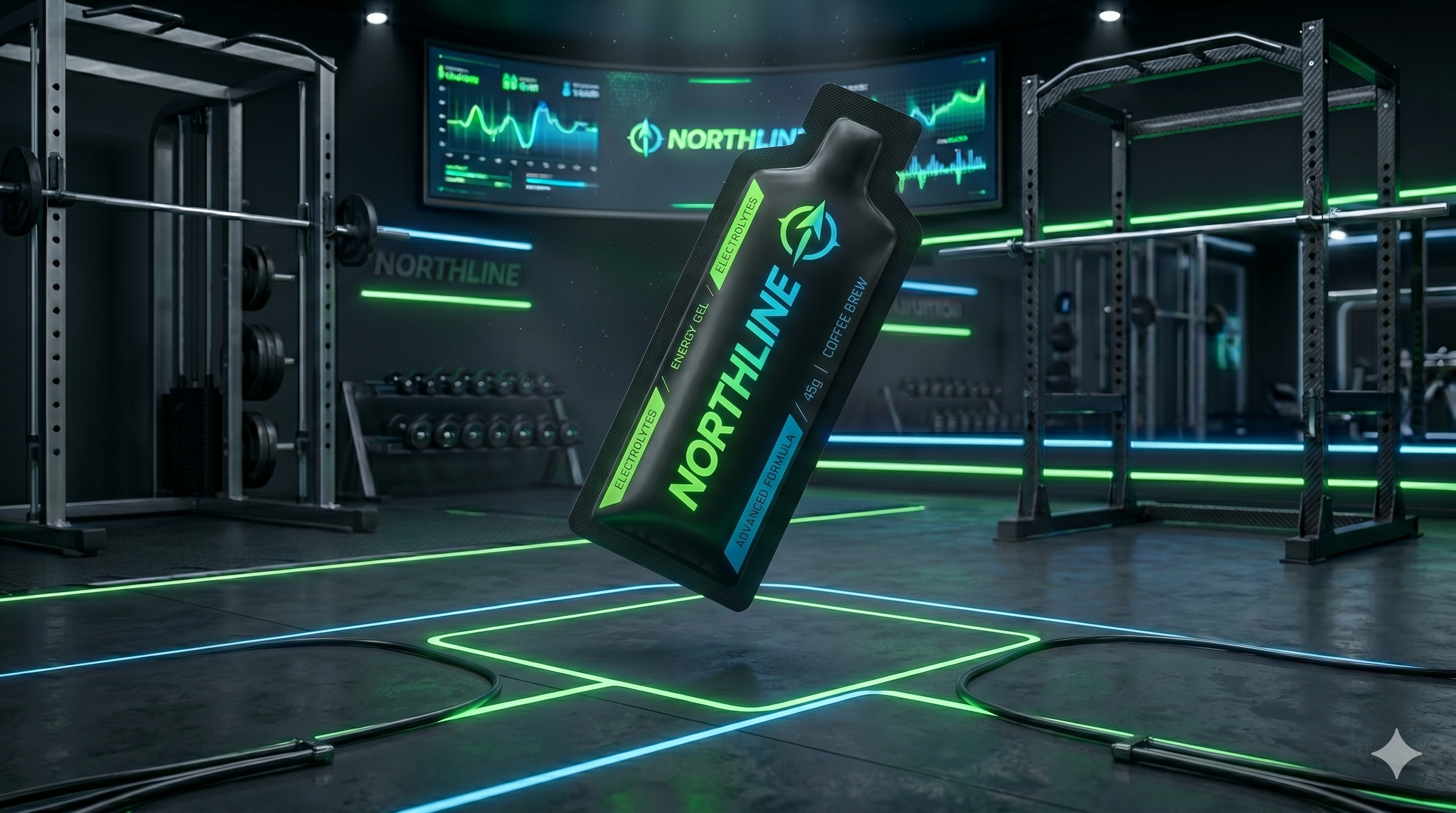
- Gel protocol: First gel at 20 minutes into the bike, then every 25–35 minutes. NorthLine gels (22g carbohydrate each) taken every 30 minutes = 44g per hour — pair with 500ml of isotonic drink containing 30–40g carbohydrate per hour to reach 74–84g total.
- Solid food option: Small portions of banana or rice-based bars in the first 60 minutes of the bike are tolerated by most athletes. Avoid solid food after the 60-minute bike mark — GI transit slows under sustained intensity, and solids late in the bike set up for GI distress on the run.
- Liquid integration: Carry NorthLine electrolyte drinks in your bottles, consuming 500–750ml per hour. The sodium content (300mg per 500ml) supports carbohydrate absorption and plasma volume maintenance for the run ahead.
T2 Transition: Fueling Opportunity
T2 is a brief but usable fueling moment. Consume one gel immediately as you rack the bike and change shoes — this bolus entering the system during the transition gives 15–20 minutes of absorption time before the run fully demands it. Do not skip this: many athletes reach the first run aid station already in carbohydrate deficit from a gap between the last bike gel and the transition period.
Run Segment: Reduced Rate, Higher Execution Risk
The 70.3 run (21.1km) is the segment where GI distress most frequently strikes, because the high intensity of race-pace running drastically reduces gut blood flow and motility. Target 45–60g carbohydrate per hour on the run — lower than the bike because gut tolerance is reduced at running intensity. Practical approach:
- Take a gel at every other aid station (approximately every 3–4km for most age-groupers)
- Alternate gels with plain water at aid stations — no concentrated sports drink on top of gels
- If GI distress begins, reduce intake to small sips of electrolyte drink only for one aid station, then resume reduced gel frequency
Practice your complete 70.3 nutrition plan on long training bricks — a 3-hour bike followed by a 60–90 minute run — at race intensity before race day. Use the Race Day Nutrition Planner to calculate your personal hourly carbohydrate targets and build your full gel-by-gel schedule adjusted to your projected finish time and body weight.