Trail running is not road running on dirt. The metabolic demands are fundamentally different: elevation gain increases energy expenditure by 10–30% compared to flat running at the same pace, technical terrain forces constant accelerations and decelerations that draw on both aerobic and anaerobic systems, and the extended duration of most trail races (4–24+ hours) pushes fueling strategy into territory that road racing rarely reaches. A nutrition plan designed for a flat road marathon will fail on a mountainous 50km trail race — often catastrophically.
Research from the International Trail Running Association (ITRA) found that GI distress is the number one reason for DNF in trail ultramarathons, affecting 30–50% of competitors. The primary causes: too much sugar, too little sodium, insufficient gut training, and failure to adjust intake for altitude and heat. Getting your trail nutrition right is not just about performance — it is about finishing.
Caloric Demands: The Elevation Multiplier
On flat terrain, running burns approximately 1 kcal per kg of body weight per kilometre. A 70kg runner covers a flat 10km and burns roughly 700 kcal. Add 1000m of elevation gain over that same distance, and the cost jumps to 900–1000 kcal — a 30–40% increase.
The implication for fueling: you need to consume more calories per hour on a trail race than a road race, but your gut's absorption capacity does not change. The ceiling for most trained guts is 60–90g of carbohydrate per hour (240–360 kcal). On a trail ultra burning 600–800 kcal per hour, you will always run a caloric deficit. The goal is to minimise that deficit, not eliminate it, while avoiding GI overload.
Fueling by Duration
- Under 90 minutes (10–15km trail race): Pre-race meal plus water is usually sufficient. A single gel at 45–60 minutes is optional insurance. Focus on hydration with electrolytes.
- 90 minutes to 4 hours (20–40km trail race): Target 60–80g of carbohydrates per hour from gels, chews, or easily digestible solids. Begin fueling at 30–45 minutes and maintain a consistent schedule every 20–30 minutes. Dual-transporter gels (glucose + fructose) are ideal for maximising absorption.
- 4–8 hours (50–80km trail ultra): Target 60–90g of carbohydrate per hour, increasingly from solid food. The shift to solids is necessary because liquid sugar (gels, drinks) becomes palatability-limited after 4–5 hours — your body will begin to reject the sweetness. Introduce savoury options: salted potatoes, rice balls with soy sauce, cheese and crackers, nut butter sandwiches.
- 8+ hours (100km+ ultra): Target 200–300 kcal per hour from mixed sources. Fat and protein become significant contributors at this duration. Real food dominates: wraps, soup (especially at night aid stations when warm food boosts morale), boiled potatoes with salt, fruit. Continue gels and chews as supplements, not primary fuel.
The Altitude Factor
Racing above 2000m altitude introduces additional nutritional challenges. Appetite suppression is common — the hypoxic environment reduces hunger signals even as caloric expenditure increases. At 3000m, basal metabolic rate increases by approximately 10%, and exercise economy worsens as VO2max declines by 6–7% per 1000m above 1500m.
Counter this by eating on a strict schedule rather than by hunger. Set a timer for every 20 minutes and consume a predetermined portion regardless of appetite. Liquid calories (smoothie-consistency drinks, gels diluted in water) are often better tolerated at altitude than solid food.
Electrolyte Strategy for Trail Running
Trail races involve longer durations, more variable intensity, and often higher ambient temperatures than road races — all of which increase sodium losses. Target 500–700mg of sodium per hour for efforts over 3 hours, increasing to 700–1000mg per hour in hot conditions or if you are a heavy sweater. Sources include electrolyte drinks, salt capsules, salted foods (pretzels, potato chips), and soy sauce packets.
Signs of sodium deficit during a race: bloating despite drinking, muscle cramps that do not respond to stretching, nausea, and mental fogginess. If you experience these symptoms, increase sodium intake immediately — a salt capsule or salty broth at an aid station can reverse early symptoms within 15–20 minutes. See our sweat sodium guide for personalised sodium rate testing.
Gut Training for Trail Racing
Your gut is trainable. Athletes who practise their race-day nutrition during training — including solid food at race intensity — experience 30–40% less GI distress on race day compared to those who only test gels. Start incorporating race-specific nutrition in your longest training runs 8–12 weeks before your target event. Introduce one new food at a time and note your tolerance.
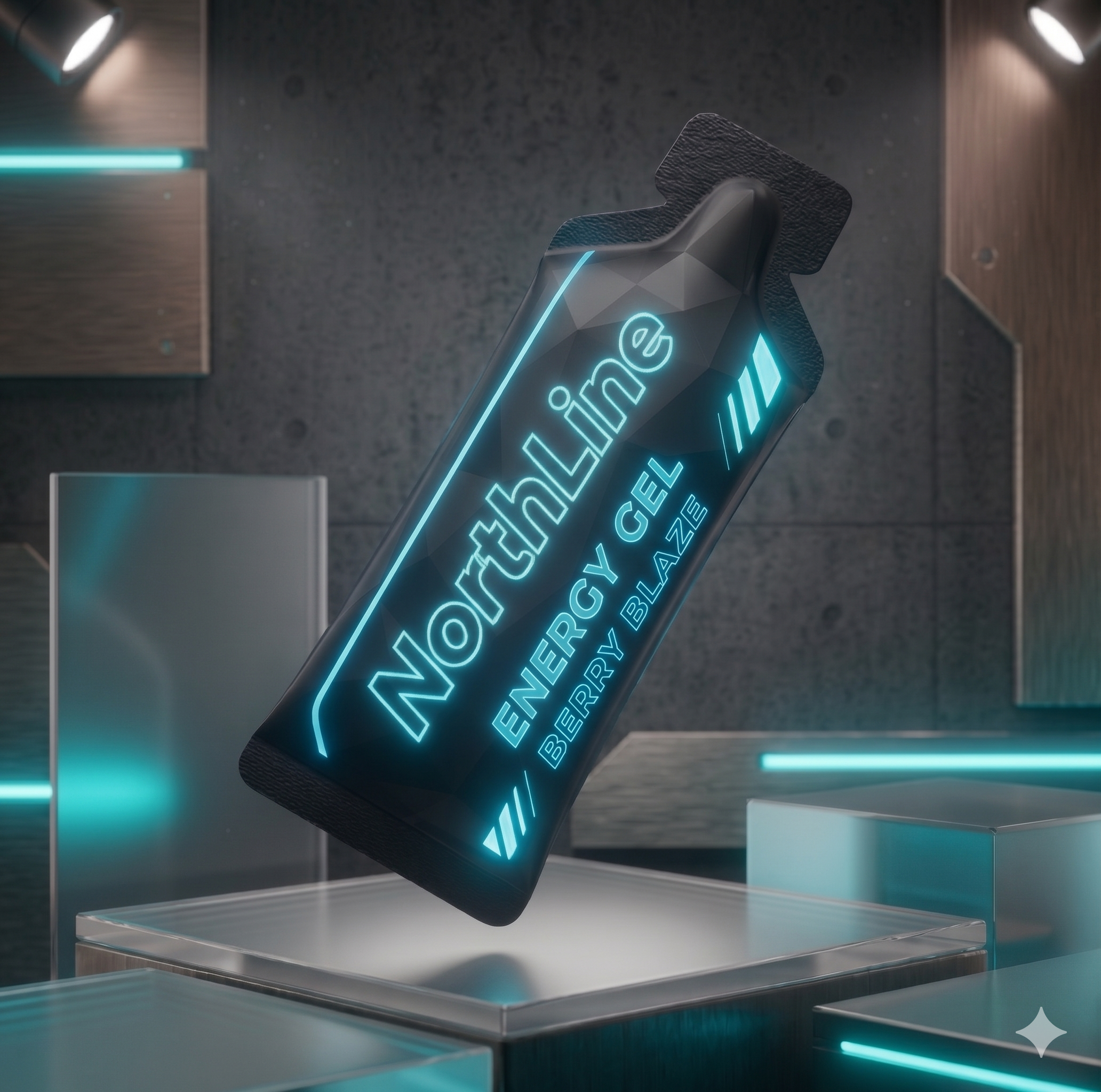
NorthLine gels use a 2:1 glucose-to-fructose dual-transporter formula that maximises absorption while minimising GI distress — a critical advantage when your gut is already stressed by elevation changes and variable intensity. The Berry and Green Apple flavours are designed to remain palatable across long durations. For your trail race fueling plan, use the Race Day Nutrition Planner to map fueling to aid station locations, elevation profiles, and estimated segment times.